

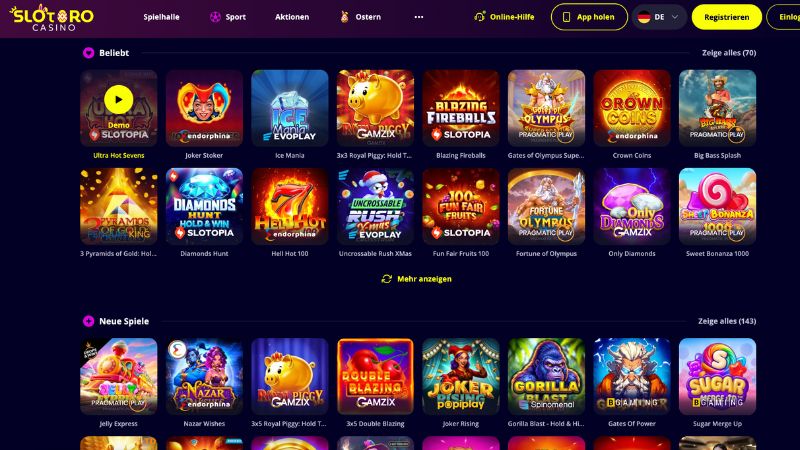
Every round on a electronic slot, every card handed in an web-based table game, every number picked in a live game begins with a string of numbers that nobody should be able to predict https://slotorokazino.gr/legal-and-affiliates/. Those numbers come from a Random Number Generator, a type of software or hardware that produces results with no discernible pattern. Regulators and independent test labs don’t just accept a developer’s word that the generator is fair. They require formal RNG certification, a process that exposes the algorithm and its application to tough statistical analysis, source code review, and live data assessment. Without that accreditation, a casino can’t prove its games deliver the advertised return to player or that outcomes are genuinely random. If you’re inexperienced to this, grasping how certification operates, who performs it, and what the seal actually assures is the first step toward taking informed choices about where to play.
What a Genuine Certificate Actually Contains
An RNG certificate is much more comprehensive than a simple logo on a footer. The document contains the name and accreditation number of the testing laboratory, the date of the evaluation, the scope of testing, and a unique reference code that can be verified on the lab’s website. It pinpoints the exact software modules tested, down to file checksums, so that the operator cannot swap in an untested component later. The certificate also indicates the confidence level of the tests—commonly 95% or 99%—and the number of game rounds simulated. If a certificate references a game category rather than a single title, it will define the RNG shared across that category and confirm that all games using it have been individually checked for mapping correctness.
Anyone reviewing such a certificate should pay attention to its validity period. Most labs issue certificates with an expiration date, typically one to three years from the test date, because continuous monitoring and periodic re-audits are part of the framework. An expired certificate means the RNG has not been recently re-evaluated, which could indicate that the software has changed or the operator has let its compliance lapse. Reputable online casinos make current certificates easy to find, often linking directly from a responsible gaming or fairness page. In the case of Slotoro Casino, the legal and affiliates section provides the appropriate documentation, allowing visitors to confirm active certifications without having to request them from support.
Hands-on Steps for Checking Certification on Your Own
Players do not need a technical background to check whether a casino’s RNG is certified. The process is straightforward and can be completed in a few minutes by applying a small set of verification habits. Start by identifying the fairness or security page on the casino’s website. That page should display the logos of recognized test labs and often includes clickable seals that open the corresponding digital certificate. If the seal is not clickable, note the lab’s name and the certificate number, then visit the lab’s official website to look through their public register. Never lean solely on a seal image that is not backed by a live link, because those can be taken from another site.
When the certificate shows up, the reader should concentrate on a few key details. First, ensure that the casino’s name or operating company matches the entity named on the document. Check the date and confirm that the certificate has not expired. Look for the software version or game titles listed and make sure they correspond to what you are playing. If anything feels unclear, the following actions can offer further assurance:
- Contact customer support and ask for the most recent RNG certificate by email; a licensed operator must supply it upon request.
- Cross-reference the testing laboratory with the regulator’s list of approved test houses to confirm the lab itself is accredited.
- Search independent player forums for mentions of the certificate number or recent lab audits; an active community often surfaces discrepancies.
- Check the HTTPS certificate and domain ownership to minimize the risk of being on a cloned site that uses fake fairness claims.
These steps do not require any coding knowledge, only a willingness to review the documents that are already available. As more platforms in the online casino industry work across multiple regulatory regimes, the consistency and accessibility of RNG certification have become reliable indicators of an operator’s overall commitment to compliance and player protection.
The reason Online Platforms Require Third-Party Certification
A platform like Slotoro Casino works under licensing conditions that demand verifiable game fairness, and RNG certification is the most concrete way to meet that obligation. From a regulatory standpoint, self-declared fairness possesses no value. A license holder must submit independent reports that verify the RNG cycles through all potential outcomes without bias, that the return-to-player percentages align with theoretical models, and that the system is not tampered with after approval. Regulators in jurisdictions including Malta, Gibraltar, and the Isle of Man write these requirements directly into their technical standards documents. Any operator that does not to maintain valid certificates risks license suspension, fines, or delisting of its game library.
Beyond regulation, certification builds the trust that sustains the entire business model. Players who put in real money require an objective reason to trust the house edge is the only advantage the casino possesses. When they see a badge from eCOGRA, iTech Labs, GLI, or BMM Testlabs, they know an accredited facility has verified the RNG under conditions that simulate millions of real game rounds. This external validation differentiates regulated online casinos from unlicensed sites that could alter payout rates or manipulate outcomes on the fly. Certification does not erase the house edge—it ensures that the edge is exactly what the game rules say it is, no more and no less.
How a Random Number Generator Actually Works
A Random Number Generator produces a series of values that determines game results. In casino software, the RNG doesn’t produce truly random numbers in the physical sense, because a computer runs deterministic instructions. Instead, it produces pseudorandom numbers using a seed value and a complex mathematical formula. The seed may be sourced from high-resolution system time, hardware entropy sources, or a mix of environmental noise. Once seeded, the algorithm yields an output that meets every statistical test for randomness, even though the process is duplicable if the exact seed and algorithm were known. The critical requirement is that the sequence be computationally inseparable from true randomness, meaning no player, operator, or insider can obtain an advantage by predicting the next number.
An RNG alone isn’t adequate; it must be properly embedded into game logic. In a roulette simulation, for example, the raw random number insomnia.gr must be mapped to the 37 possible pockets without creating bias. The same principle stands to card shuffling arrays and slot reel positions. If the mapping algorithm is flawed, even a perfectly certified RNG can yield skewed results. That’s why certification covers both the generator and the way the game uses its output. Labs scrutinize whether the scaling functions are proportionate and whether edge cases, such as very long sequences of the same card or number, arise with the statistically expected frequency.
Recognized Laboratories and Their Own Standards
Various internationally recognized test labs dominate the gaming certification landscape, and each functions according to ISO/IEC 17025 approval for testing and calibration laboratories. Gaming Laboratories International, often called GLI, upholds a full set of standards called GLI-19 and GLI-20 that include interactive gaming systems and kiosks. BMM Testlabs offers comparable services with a strong influence in both North America and Europe. iTech Labs, based in Australia, has validated thousands of online games and is frequently mentioned by European regulators. eCOGRA, in addition to testing, offers player dispute resolution services and a safe and fair seal that many players recognize instantly.
These labs do not function in isolation. They keep continuous dialogue with gambling commissions to match their test protocols with evolving regulations. When a jurisdiction updates its technical requirements, the labs modify their checklists and inform operators about compliance gaps. The certificate issued at the end of a successful audit is not a generic document. It details the exact game titles, version numbers, and server configurations that were tested. Any update to the RNG algorithm, the game client, or the shuffle logic typically requires a re-certification or at least a delta review. This tight link between software version and certificate means that players can cross-check the live game with the lab’s public register, a step that offers a layer of practical transparency.
Differentiating RNG Certification from Game Payout Audits

A recurring point of confusion is the difference between RNG certification and an overall game payout audit. The two are intimately related but not the same. RNG certification centers on the generator’s randomness, unpredictability, and resistance to tampering. It answers the question: “Can anyone foresee or manipulate the raw values that drive the game?” A payout audit, frequently called return-to-player verification, takes the certified RNG output and simulates the complete game logic to assess how much the game pays back over a vast number of spins or hands. This second audit verifies that the advertised RTP, such as 96.5%, is achieved within a statistically acceptable margin of error.
Both evaluations are necessary for a complete fairness picture. A game could have a flawless RNG but still miss of its promised RTP if the paytable is miscalculated or if the bonus frequency is coded incorrectly. Conversely, an accurately configured paytable running on a biased RNG would fail the randomness tests. For this reason, test labs present both results as part of the same engagement but on separate reports. When players seek proof of fairness, they should preferably see a current RNG certificate plus a game-specific RTP report that matches the version deployed on the site. Operator platforms that take transparency sincerely will publish both, sometimes even linking them inside the game’s help menu.
The way the Certification Process Unfolds Step by Step
RNG certification is not a one-time checkbox; it is a multi-stage technical audit that can span weeks or even months for a new game or platform. The process starts with the game developer or casino operator submitting the full source code, the RNG algorithm documentation, and the compiled binaries to the test lab. The lab then performs an exhaustive series of evaluations that include randomness, unpredictability, non-repeatability, and uniform distribution of outputs. If the RNG is part of a larger game server system, the lab also examines the communication protocol, seed management, and any failover mechanisms that could affect randomness during server restarts or maintenance events.
The testing methodology incorporates well-known statistical batteries such as Diehard, NIST SP 800-22, and Marsaglia’s tests. The specific steps usually adhere to this order:
- Source code review to confirm the algorithm matches the documented design and includes no hidden bias or backdoor that could enable result manipulation.
- Seed management audit to verify that seeds are generated from high-entropy sources and are never reused or predictable across sessions.
- Large-scale output generation where billions of raw RNG values are gathered and examined for statistical anomalies, runs, gaps, and correlations.
- Game-level mapping analysis to ensure that the transformation from raw RNG output to game outcome avoids introducing uneven probability distribution.
- Return-to-player verification through simulation of tens of millions of game rounds, contrasting actual payout rates against the theoretical model within a tight tolerance band.
- Runtime environment checks that verify the live deployment environment matches the certified configuration and that no outside process can reseed or interfere with the RNG.

